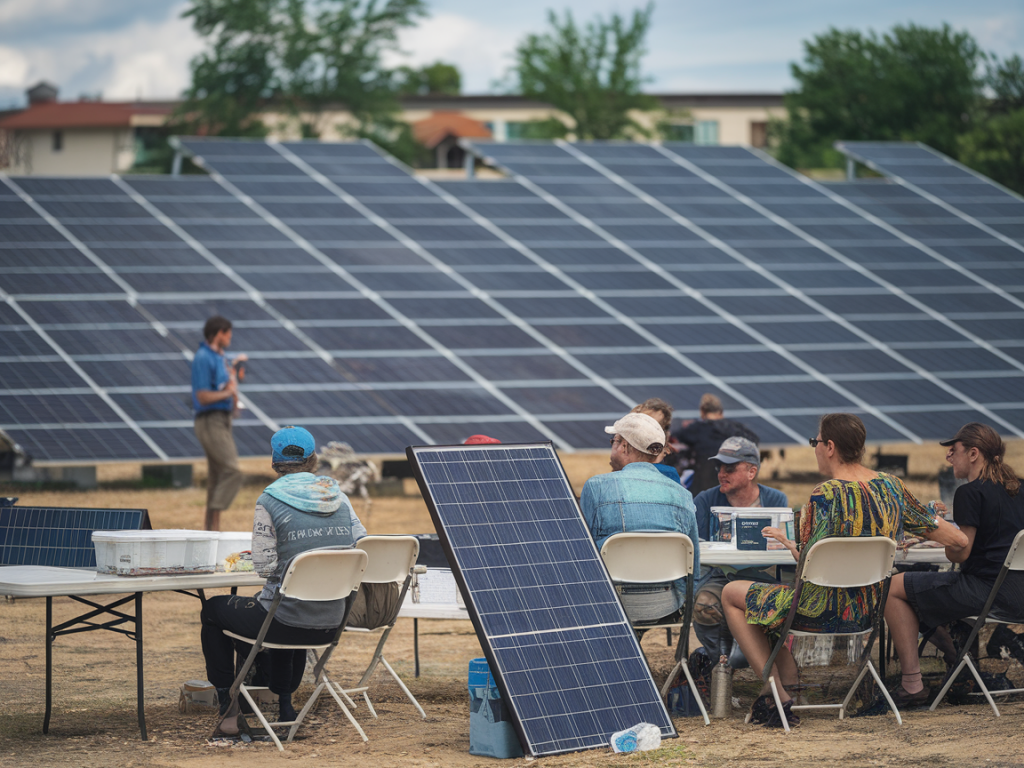
I used to think community solar co‑ops were only for eco‑communities or remote villages. Then I helped set one up in my neighbourhood and discovered how practical, affordable and genuinely community‑building they are. If you’ve ever wondered whether pooling resources for rooftop or shared ground‑mounted solar could cut your household electricity bill — and how to get a UK grid connection, split costs fairly and stay on the right side of regulation — here’s what I learned in the trenches.
Why a community solar co‑op can actually save you money
At first glance, solar seems like an individual purchase: you put panels on your roof, you get the benefit. But when panels are shared across several households you get economies of scale. We bought panels and inverters in one bulk contract, negotiated lower installation and maintenance fees, and split the management overhead. That meant a lower per‑household capital cost and better returns than if each household had gone solo.
There are several ways a co‑op lowers bills:
Shared capital costs — bulk buying reduces unit price for panels, inverters and mounting hardware.Lower maintenance and admin — one contract for cleaning, monitoring and insurance instead of many.Local consumption — electricity used locally avoids distribution charges that large generators face; each unit produced that you use directly offsets what you'd buy from your supplier.Revenue from exports — exported electricity can earn under the Smart Export Guarantee (SEG).Choosing a legal and governance model
One of the first things we settled was structure. It matters for fundraising, liability, tax and community control. The common UK options are:
Co‑operative society — democratic, member‑led and familiar to energy projects. Good for community control and attracts ethical investors.Community Benefit Society (CBS) — similar to a co‑op but explicitly exists to benefit the community rather than only members.Community Interest Company (CIC) — limited company with an asset lock for community projects; simpler governance than a CBS for some setups.We chose a Community Benefit Society because our aim was shared local benefit and it helped in applying for community grants and ethical loans. If you want investor returns, a private company structure might be more suitable — but expect less community control.
How to start—step by step
Here’s a practical roadmap based on what worked for us:
1. Build a local group and scope interest. Host a couple of meetings, do a simple survey: how many households, likely roof availability, and appetite to invest or buy shares.2. Technical feasibility. Get a preliminary site assessment from an MCS‑certified installer (required for some incentives and for SEG eligibility). Consider roof orientation, shading, and whether rooftops are contiguous or you need a ground array.3. Decide ownership model. Will the co‑op own the panels and sell electricity back to members? Or will members own shares proportional to their contribution? This affects billing and metering.4. Legal formation and governance documents. Register your society/company, write rules on membership and share distribution, set up a bank account and decide how profits or savings are distributed (reinvested, returned to members, or used for community benefits).5. Finance and grants. Blend member shares, community loans, and grants. Look at the UK government’s community energy funds, local council grants, or ethical lenders like Triodos and Co‑op & Community Finance.6. Apply for grid connection. Contact your Distribution Network Operator (DNO) — e.g., UK Power Networks, Western Power Distribution, Scottish and Southern Electricity — for a connection quote. This step is critical and can take months depending on capacity and local constraints.7. Install and commission. Use MCS‑certified installers. Register the system for SEG and set up your metering and export arrangements.8. Operate, monitor, and distribute savings. Use a monitoring dashboard and agree the formula to apportion generated energy and export payments to members.Securing the UK grid connection — what to expect
Grid connection is the part that surprised me most. You don’t deal with a single national monopoly; you apply to your local DNO for approval. They examine capacity, network constraints and whether an upgrade is needed. Expect these points:
Application and quote. The DNO provides a quotation and timescale (often several weeks to months). For small rooftop arrays, connection is usually straightforward. Larger arrays or ground‑mounted systems may need network reinforcement.Export arrangements. Most community projects export any surplus to the grid and receive SEG payments from their electricity supplier. Registering under SEG requires the installation to be MCS‑certified.Metering. To split generation fairly, we used sub‑metering and a central production meter so each household’s import vs local usage could be calculated. Some projects use smart meters and bespoke billing platforms.Private wire vs grid export. If households are very close (same terrace or estate), a private wire can avoid DNO export complications but needs legal agreements and may require separate licences. For most co‑ops, exporting to the grid under SEG is the simpler route.How to fairly split costs and benefits
There are a few models for sharing costs and savings. We experimented and settled on a hybrid that felt fair to everyone:
Share‑based ownership — members buy shares which fund capital costs. Their share of generation (and export revenue) is proportional to share size.Consumption credit — members receive credits on their bills or internal accounts based on how much of the co‑op’s generation they consume directly (tracked by sub‑meters).Fixed fee + variable credit — a small fixed maintenance fee plus credits for generation; this avoids free‑riding and covers ongoing O&M.| Cost item | Example total | Per household (10 homes) |
|---|
| Panels & inverters | £30,000 | £3,000 |
| Installation & mounting | £8,000 | £800 |
| Metering & comms | £2,500 | £250 |
| O&M (annual) | £1,200 | £120 |
| Total initial | £40,000 | £4,050 |
In our case, households that used more daytime electricity (home workers) gained higher direct value from the panels. To keep it equitable we allowed members to buy additional credits or shares if they wanted a greater share of generation.
Key pitfalls and practical tips
If I could rewind, here are the shortcuts and mistakes I’d warn you about:
Start the DNO conversation early. Grid constraints can change the project cost dramatically. Early engagement avoids nasty surprises.Use MCS-certified equipment and installers. It keeps options open for SEG and ensures quality.Agree billing rules in advance. Disputes later are demoralising. Put transparent formulas in your rules for how production, export, maintenance and eventual replacement costs are handled.Plan for replacement. Inverters typically need replacement after 10–15 years; budget for it now rather than later.Keep reporting simple. We used a simple web dashboard showing daily generation, household credits and export payments — transparency builds trust.Starting a community solar co‑op is part practicality, part social project. Along the way I met neighbours I’d never talked to, saved money on our bills and built a resilient local energy resource. If you’re curious about starting one in your community, reach out to local councils and co‑op support groups — and line up your DNO contact early. The technical, legal and social scaffolding is manageable if you go step by step, and the payoff can be both financial and communal.