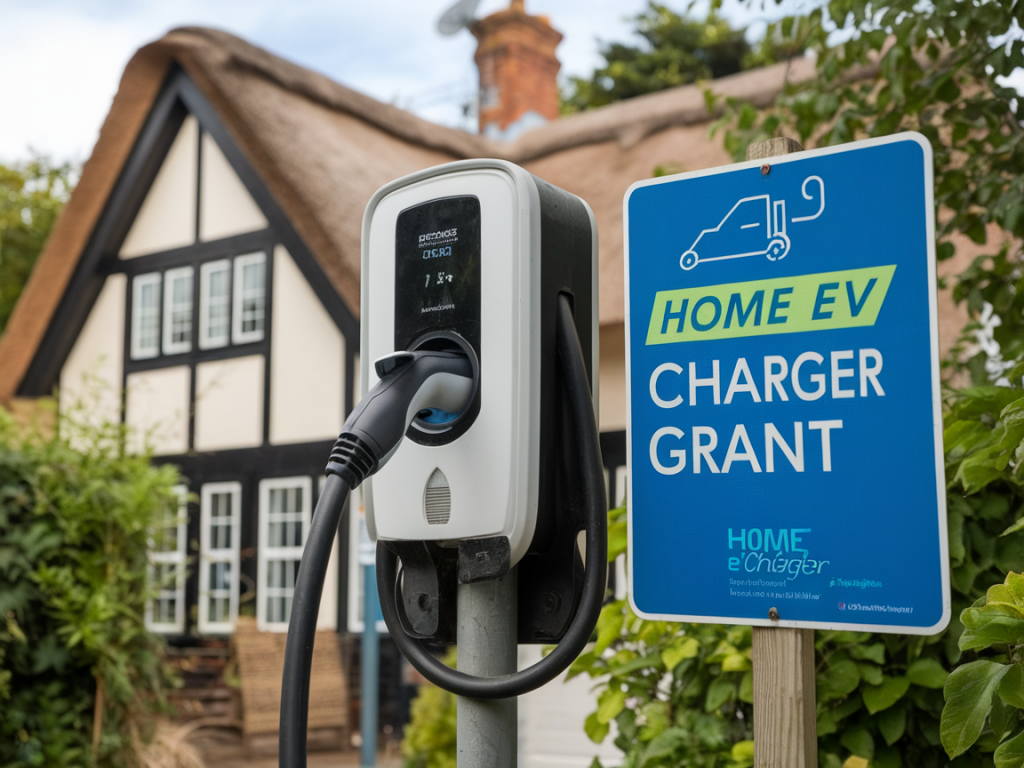
I’m often asked by friends, neighbours and readers which home EV charger grant applies to their UK postcode — and how to claim it without making costly mistakes. Installing a home charger is one of the smartest upgrades you can make if you own, or are about to buy, an electric vehicle. But the grant landscape feels like a maze: national schemes, local council offers, landlord rules, and installer pitfalls. I’ve walked the path, spoken with installers and policy experts, and helped people through the paperwork. Below I set out, in plain language and with practical steps, how to find the right grant for your postcode and how to claim it reliably.
Which grants exist (and which affect your postcode)
First, a snapshot of the main schemes you’re likely to encounter in Great Britain (England, Scotland and Wales) as of mid-2024. Schemes change, so always double-check official sources for the latest rules for your area.
| Grant / Scheme | Who it typically covers | Geographic scope | What it pays for |
|---|---|---|---|
| Electric Vehicle Homecharge Scheme (EVHS) | Homeowners and businesses with off-street parking | Great Britain (subject to availability and eligibility updates) | Contribution towards the cost of installing a home charger (voucher or installer claim) |
| Workplace Charging Scheme (WCS) | Employers, charities and public sector organisations | Great Britain | Contribution towards workplace chargepoints (up to a set number of sockets) |
| On-street Residential Chargepoint Scheme (ORCS) | Local authorities to install street-side chargers | England (and similar local funds in other nations) | Funding for local networks of on-street chargepoints |
| Local authority or council grants | Residents within specific council areas | Varies by council and postcode | Can offer top-ups, free installs for eligible residents, or targeted schemes |
| Scotland-specific initiatives | Scottish residents (sometimes stricter eligibility) | Scotland | Occasional targeted funding or deployment programmes |
Important: Northern Ireland operates differently — check the Northern Ireland Executive or local council resources for schemes there.
How to check which grant applies to your postcode
Here’s the checklist I use and recommend to readers. It will save you time and reduce the risk of hiring an installer who can’t complete a funded claim.
- Visit the official government pages: Search for the “Electric Vehicle Homecharge Scheme” and the “Workplace Charging Scheme” on gov.uk. These pages explain national eligibility and provide links to advisers and installer lists.
- Use your postcode in local council search tools: many councils publish pages on EV charging and any local grants or priority programmes. Type “[your council] EV charge grant” into your search engine.
- Check accredited installer lists: installers who can process grants are often EVHS-approved or registered with the Office for Zero Emission Vehicles (OZEV). Your installer should confirm eligibility before quoting.
- Ask neighbours or community groups: local Facebook groups, Nextdoor or parish newsletters often flag council pilots and local grants specific to postcodes.
Step-by-step: how I claim a home charger grant without error
I approach this like reporting a story: verify sources, collect documentation, and record every interaction. Follow these steps to make a clean claim.
- Confirm basic eligibility: You typically need off-street parking (driveway, garage) and proof you own or occupy the property. If you rent, landlords must usually provide written permission.
- Gather proof: Have ready a driving licence or passport, proof of address (utility bill), and proof of vehicle ownership or a lease agreement showing the EV’s registration number.
- Check postcode-specific rules: Use your council website and the gov.uk pages. Some councils top up national grants or run separate schemes for flats or terraced streets.
- Choose an accredited installer: Ask the installer to confirm they are authorised to process the grant and can register the job correctly. Get that confirmation in writing (email).
- Agree the specification: Decide on the type of charger. I recommend smart chargers that support load balancing and timed charging (brands like Rolec, Pod Point, or EO are common). Ensure the installer quotes the grant-discounted price and itemises grant-related work.
- Claim via the installer or voucher system: Many installers process the government contribution directly and bill you the remainder. For some schemes you apply for a voucher first — follow the exact steps on the official portal. Don’t pay the full amount upfront assuming you’ll be reimbursed unless your contract guarantees that.
- Keep all receipts and confirmation emails: Save invoice, installer accreditation, vehicle documents and any grant reference numbers. These are crucial if there’s a later audit.
Common costly mistakes — and how to avoid them
People frequently tell me about three recurring errors. I’ve seen them cost homeowners hundreds of pounds and weeks of delay.
- Hiring a non-accredited installer: If the installer can’t process the grant or mis-registers the job, you may lose the grant and still pay the installation cost. Always verify accreditation and ask for written confirmation they will handle the grant claim.
- Not checking vehicle eligibility or registration date: Some national rules tie eligibility to vehicle registration dates or vehicle type. Confirm with your installer and the official guidance before payment.
- Forgetting landlord permission or lease limits: Renters who don’t get written landlord consent can be left with an unusable installation or asked to remove it. Get permission in writing and agree who pays for removal at end of tenancy.
Special cases: flats, shared driveways and on-street parking
These are the trickiest scenarios — and the ones councils are most likely to target with pilot funding.
- Flats and communal parking: National EVHS often excludes communal areas because installing chargers requires communal decision-making and sometimes electrical upgrades. However, many councils run targeted schemes for flats — apply through your council or residents’ association.
- Shared driveways: Get written agreement from other users. Sometimes the council or landlord will require an easement or formal arrangement before funding.
- On-street parking: If you can’t park off-street, look for ORCS-funded local chargepoint rollouts and apply for on-street options via your council.
What to ask your installer — my checklist to avoid surprises
- “Are you accredited to process the EVHS (or other named scheme)?” — get proof.
- “Will you apply for the grant on my behalf or do I need a voucher?” — confirm process and timeline.
- “Can you supply a breakdown: hardware, labour, any electrical upgrade costs and VAT?” — ask for an itemised signed quote.
- “Will the installation require an electrical panel upgrade, and who pays?” — if upgrades are needed, grant coverage may vary.
- “What warranty and aftercare do you provide?” — check manufacturer warranty (typically 2–5 years) and installer workmanship guarantee.
Getting a home EV charger with the right grant shouldn’t be a headache. The key is to verify your postcode-specific options via official and local council channels, use accredited installers, collect the correct documents early, and protect yourself with written confirmation of who will process the grant and how much you’ll pay. If you want, tell me your postcode and whether you own or rent — I can walk you through the likely schemes and the exact pages to check.