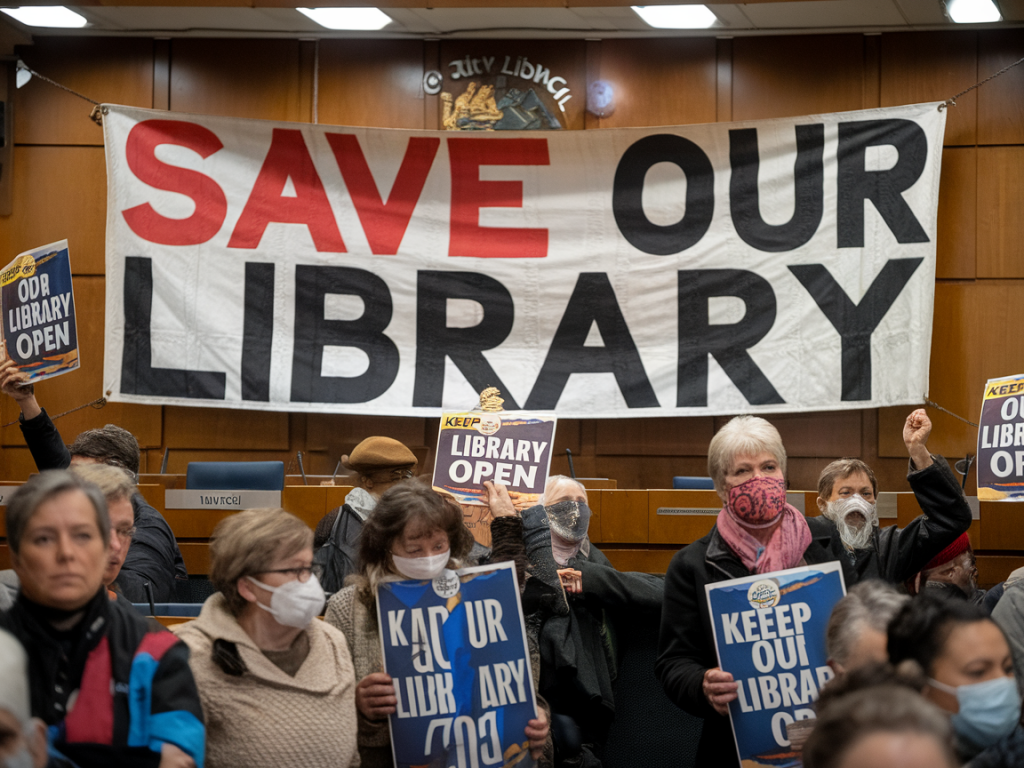
I remember the first time I stood in front of my local library on a cold morning clutching a stack of leaflets: the council had put forward plans to close the branch and repurpose the building. I’d always thought losing a library was a slow, bureaucratic fade, but it can move quickly once a council decides to act. Over the last decade I’ve helped coordinate volunteer campaigns, sat through council chambers, and worked with lawyers and community organisers. Below I set out the exact meetings, petitions and legal notices that actually work — the practical steps I’d follow if my neighbourhood library was threatened tomorrow.
Start with facts: what to request, and where
Before you galvanise the neighbourhood, gather the facts. I begin by using three simple information requests:
Check the council’s public consultation documents and cabinet meeting papers online — these often contain the proposal, cost savings and the decision timeline.File a Freedom of Information (FOI) request for any internal reports, cost-benefit analyses and correspondence about the proposed closure. Be specific (dates, departments, keywords) and set a 20-working-day deadline.Request the library’s usage statistics and service standards. In England, the Public Libraries and Museums Act 1964 requires councils to provide a “comprehensive and efficient” library service — these stats matter for legal and political arguments.Once I have those documents I can map the decision-makers, the legal levers, and the communication windows where public pressure matters most.
Meetings that matter — the exact types and how to use them
There are four meeting types where your presence and evidence matter most. I make a calendar with these dates and mobilise volunteers to attend.
Cabinet / Executive Committee meeting — This is usually where the proposal is signed off. You must submit a written request to speak (check the council’s public speaking rules) and bring a short, evidenced statement. I always prepare a one-page summary with usage figures, local testimonies, and alternative savings proposals.Scrutiny Committee or Overview & Scrutiny Board — Scrutiny can delay or refer decisions back for reconsideration. I press scrutiny to call witnesses (library staff, union reps, users) and demand the FOI'd evidence. Ask them to produce a report with recommendations — it can be politically costly for councillors to ignore this.Full Council meeting — Some councils require final approval from the full chamber. A well-timed petition and a delegation to speak at Full Council can swing votes, particularly if local councillors face re-election soon.Public consultations / drop-in sessions — These are often box-ticking exercises, but they’re crucial for the record. I attend, bring a staffed stall with sign-up sheets, collect written objections and audio/photographic evidence of turnout.A simple table helps me track these sessions:
| Meeting type | What I do | Typical timing |
| Cabinet / Executive | Request to speak, submit evidence pack | Decision window — usually 1–6 weeks after proposal |
| Scrutiny Committee | Demand review, request witnesses, seek referral | Before final sign-off — can delay decision |
| Full Council | Present petition, public questions | Monthly or quarterly meetings |
| Public consultation | Collect written objections, log attendance | During consultation period (often 4–12 weeks) |
Petitions that work — online and offline tactics
Petitions are about numbers and narrative. I combine a focused paper petition at the library and local shops with a targeted online petition. Here’s my approach:
Paper petitions at the library — People who use the library are your core supporters. A paper petition with short, clear wording (“We oppose the closure of X Library and call on the council to explore alternatives”) feels personal. I keep it simple: name, postcode and email/phone.Local street canvassing — I train volunteers to gather signatures at community events, churches, schools and markets. Getting a cross-section of postcodes shows the service is used widely.Online petition targeted at council area — Use Change.org or 38 Degrees for national visibility, and the council’s own petition platform if they have one — many councils have thresholds that trigger a council debate (check the council petitions scheme; thresholds vary but are often between 500 and 5,000 signatures).Petition messaging — I always include alternatives: community run hours, partnership with schools, asset transfer, or merging with a nearby branch rather than closure. Councillors respond better to solutions than just protest.Collecting contact details as part of the petition lets you form a campaign mailing list; don’t lose that file.
Legal notices and threats that have teeth
Legal steps are serious, time-sensitive and often expensive. I recommend them when political routes stall and you have documentary evidence. The notices that actually change decisions are:
Pre-action letter (letter before claim) — This is a formal legal letter sent to the council to set out your grounds for a potential judicial review, demanding they reconsider within a set period. It is often enough to pause a decision while the council re-evaluates.Judicial Review — In England and Wales you must act promptly and generally within three months of the decision (often much sooner in practice). Grounds include illegality, irrationality, or procedural unfairness. I only consider this with a solicitor who specialises in public law and after funding options are explored.Freedom of Information (FOI) refusals and internal review — If FOI responses are redacted or withheld, request internal review and, if needed, appeal to the Information Commissioner’s Office. Forced disclosure can reveal political motives or flawed calculations.Community Asset Transfer / Community Right to Challenge — Under the Localism Act 2011, community groups can bid to run council services or request asset transfer. I prepare a viable business plan and volunteer rota demonstrating we can deliver the service.Where possible, I use a staged legal approach: a pre-action letter to buy time and force transparency, and only escalate to court if the council gives no reasonable alternative. Legal action is expensive; organisations like LawWorks, the Free Representation Unit and university legal clinics sometimes provide advice or pro bono support.
Messaging, media and allies
Legal and political steps must be backed by public pressure. I work with three categories of allies:
Local MPs and councillors — brief them privately with evidence, then invite them to speak publicly with you.Unions and library staff — their testimony about staffing and service impact is persuasive and often essential in scrutiny hearings.Local press and social media influencers — a good human story (a child who learned to read at the library, an elderly patron who relies on the service) will get traction. I prepare concise press releases, high-quality photos and offer spokespeople for interviews.I build a simple timeline spreadsheet with meeting dates, petition targets, FOI deadlines, and a media plan. This keeps the campaign focused and makes it harder for the council to claim there was no coordinated opposition.
Practical templates I find useful
I keep three short templates ready: a 150-word public speaking script for meetings, a one-page evidence pack for councillors, and a 300–400 word pre-action letter checklist for a solicitor. Here’s the format I use for the pre-action checklist:
Summary of decision and datesGrounds for challenge (procedural flaw, failure to consult, breach of statutory duty e.g. Public Libraries and Museums Act 1964)Evidence list (FOI documents, consultation responses, usage stats)Requested remedy (quash decision, refer back to scrutiny, alternative plan)Time window for response (normally 14–21 days)If you’d like, I can provide sample wording for these templates tailored to your council. I’ve used these steps to force reviews, secure community management deals, and in some cases, reverse closure decisions altogether. It takes organisation, persistence, and the right combination of public pressure and legal leverage — but libraries are a community’s nerve centre, and it’s worth fighting for them.