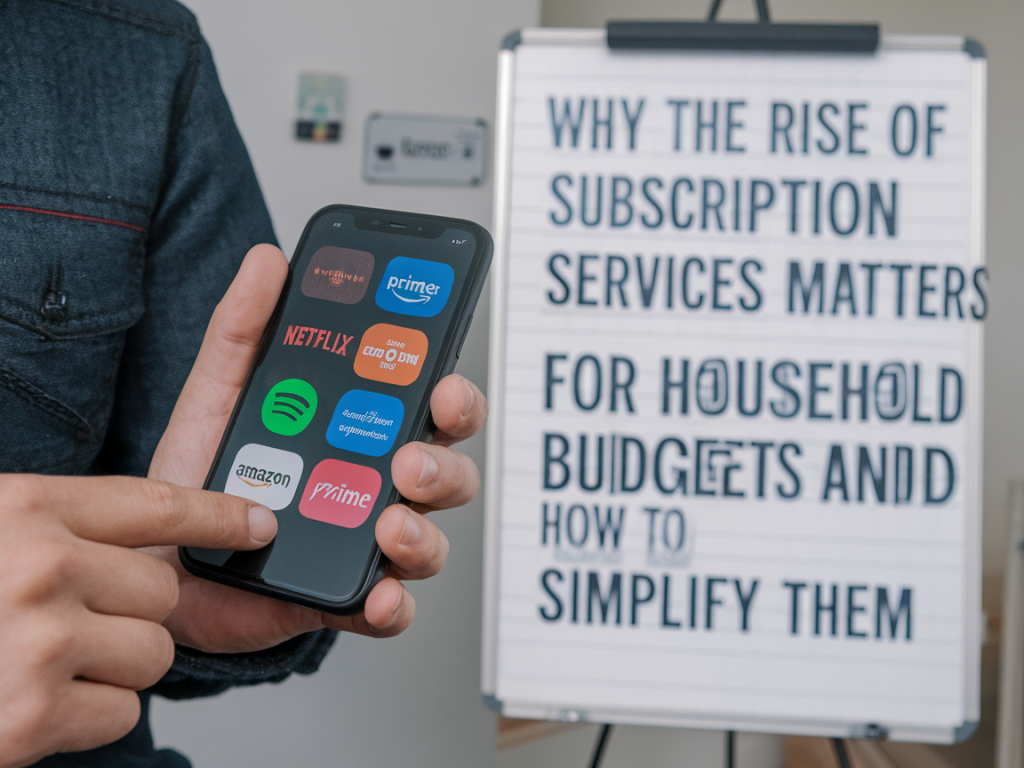
I started paying for my first subscription years ago—an easy $4.99 for a music app—and it felt like a bargain. Since then, subscriptions have crept into every corner of daily life: streaming video, meal kits, fitness apps, cloud storage, premium news, and even toothbrush refills. Alone each one seems reasonable; together they can quietly reshape a household budget. Lately I’ve been tracking my own recurring charges and talking to friends, and I want to share why this trend matters and how I’ve learned to simplify a cluttered subscription landscape without feeling deprived.
Why subscriptions matter for household budgets
Subscriptions change how we think about spending. Instead of occasional purchases that we evaluate and forget, we accept small recurring payments that compound over time. That shift has three big effects on household finances:
- Psychology of small amounts: We underestimate the cumulative cost of multiple low-priced services; $5 here and $10 there quickly adds up.
- Predictable but persistent outflows: Monthly charges are easy to budget for—until they’re not. An extra $30–$60 per month can mean the difference between a comfortable month and one with little wiggle room.
- Subscription creep: Free trials, promotional offers, and autopay make it simple to acquire services and hard to stop them. People forget or ignore renewal emails, and old accounts stay active long after they’re useful.
In practical terms, a household that adopts several subscriptions can end up spending as much as they would on a mortgage payment in some regions or as much as a quarterly car service over the course of a year. And because subscriptions often pay themselves automatically, the pain point only appears when you review your statements.
Which subscriptions tend to be the most impactful?
Not all recurring services are equal. I find it useful to classify subscriptions by three attributes: frequency of use, replaceability, and cost. That lens helps me prioritize which ones to cancel or negotiate.
- High-use, hard-to-replace: Examples include core utilities like internet, home security, or a primary cloud backup that contains irreplaceable family photos.
- Moderate-use, replaceable: Streaming services (Netflix, Disney+, Amazon Prime Video), meal kits, and fitness apps that have competitive alternatives.
- Low-use, easily replaced: Niche apps, extra cloud storage accounts, or premium versions of apps you rarely open.
For me, a handful of streaming platforms were the biggest monthly hits. Between Netflix, Disney+, Hulu, and two niche services, I realized I was paying well over £30 a month for shows I didn’t watch frequently. Removing two subscriptions freed up nearly £15–£20 a month—money I redirected to a separate emergency fund.
How I audit and simplify my subscriptions
When I set out to simplify, I followed a practical four-step routine that’s easy to replicate.
- Make a complete inventory: I looked at my bank and credit card statements for the past three months and wrote down every recurring charge. Don’t rely on memory—companies rarely send a single reminder you’ll notice.
- Categorize by value: For each subscription I asked: How often do I use this? Is there a cheaper alternative? Would I miss it if it were cancelled? I gave each one a quick score (useful / replaceable / unnecessary).
- Cancel or consolidate: I cancelled services in the unnecessary bucket and explored family or annual plans for the moderate-use ones. Consolidating multiple services under a family plan or bundling (for example, Amazon Prime’s combined benefits) can often save money.
- Automate review reminders: I set calendar reminders every six months to reassess. Subscriptions that feel essential today might be irrelevant tomorrow.
Tools and strategies that helped me
There are apps and bank features that can make the audit much easier. I used a mix of technology and simple habits:
- Financial apps: Tools like Emma, Cleo, and Truebill (where available) scan bank accounts and show recurring payments. They won’t catch everything, but they give a strong starting point.
- Bank alerts: Many banks allow you to tag recurring payments or send alerts for transactions over a threshold. I enabled these for all cards I use for subscriptions.
- Use a single card for trials: I started using one card exclusively for new subscriptions. If I forget to cancel a trial, it’s easier to spot and cancel the card or block payments.
- Share where it makes sense: Family plans for Spotify, Apple Music, Disney+, and Netflix can cut individual costs dramatically. Be explicit about passwords and expectations when sharing—miscommunication causes stress.
Negotiation, timing, and smarter choices
Cancelling isn’t the only lever. I discovered other tactics that reduced my recurring spend.
- Negotiate: For services you’ve had for a year or more, it’s often possible to get a loyalty discount. I called my internet provider and got a lower rate by threatening to move; many customer service reps will offer retention deals.
- Annual vs monthly: If you plan to keep a service for a year, the annual option typically comes with discounts. It requires more upfront cash but reduces the total yearly cost.
- Rotate, don’t subscribe: For entertainment, I rotate subscriptions. I keep one streaming subscription active and rotate others every few months depending on new releases I want to watch.
- Use free tiers when possible: Many services offer capable free versions—YouTube, Spotify Free (with ads), and limited cloud storage. If you can accept a few compromises, it’s a legitimate way to save.
Practical cost snapshot
| Service type | Typical monthly cost | Annual cost (approx) | Notes |
|---|---|---|---|
| Streaming video (per service) | £6–£15 | £72–£180 | Bundle options and ad-supported plans can lower cost |
| Music (individual) | £5–£10 | £60–£120 | Family plans reduce per-person cost |
| Meal kits | £40–£70 | £480–£840 | High convenience, often easiest to trim |
| Fitness apps | £5–£25 | £60–£300 | Gym membership vs app trade-offs worth considering |
| Cloud storage | £1–£10 | £12–£120 | Consolidate accounts and delete duplicates |
When to keep a subscription
I don’t advocate cancelling for the sake of it. I kept services that deliver clear, repeated value: one streaming platform I use every week, my primary cloud backup with encrypted storage for work files, and a grocery delivery subscription that saves me time and prevents impulse spending. The key is intentionality—keep what improves your life enough to justify the recurring cost.
Subscriptions aren’t going away. They offer convenience and a predictable user experience, but they also require periodic attention. By inventorying what you pay for, deciding what truly matters, and using a mix of tech and simple habits, you can simplify your recurring bills and free up money—often for things that matter more. I still sign up for the occasional new service, but now I do it with a plan for when and how I’ll reassess it.