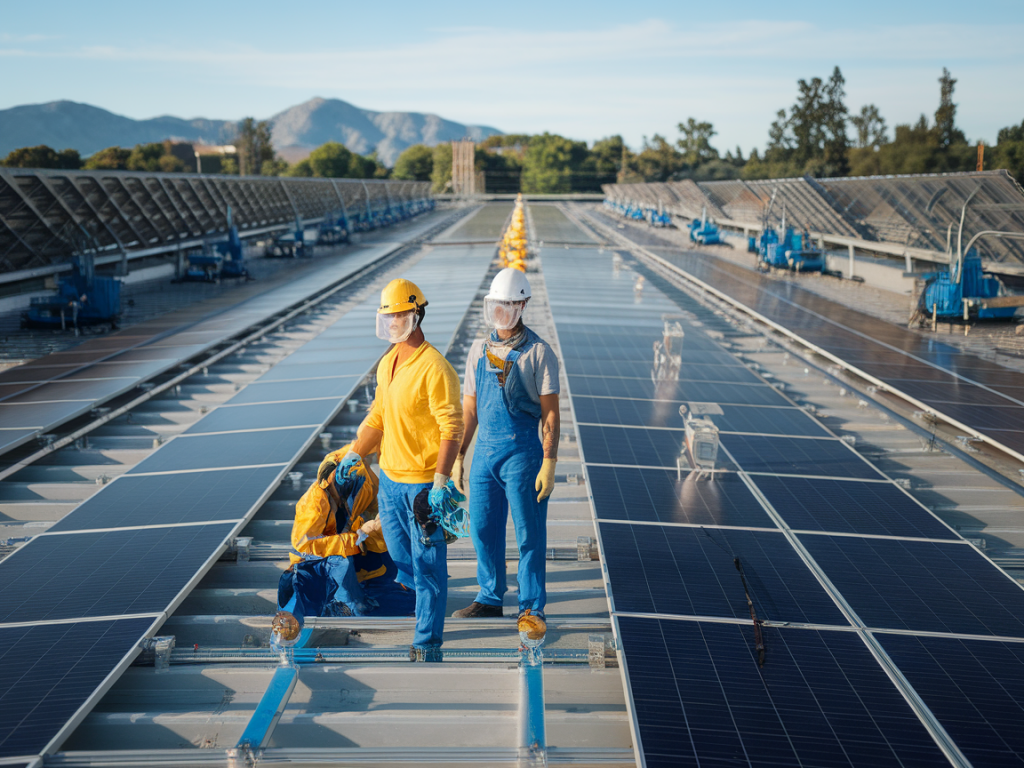
When I evaluate a company claiming to be "sustainable," I try to look past the glossy sustainability report and the Instagram-friendly images of wind turbines. Greenwashing is a real risk: firms can dress up ordinary business decisions as sustainability wins. As an editor who’s spent years dissecting corporate claims, I’ve learned that investors need a sharper lens — one that combines rigorous data, governance scrutiny, and practical questions about how sustainability is embedded in the business model.
Start with clarity: what exactly is the claim?
My first step is always simple: ask what the company is specifically promising. "Carbon neutral by 2030" is very different from "we're reducing emissions." Vague language like "we’re committed to sustainability" should set off alarm bells. I look for concrete targets, timelines, and scopes — do they cover scope 1, 2, and crucially, scope 3 emissions? If scope 3 is omitted, that’s often where the biggest climate impact hides, especially for manufacturers, retailers, and logistics-heavy firms.
Check the numbers — and how they're measured
Ambitious targets mean little without credible measurement. I want to see:
Beware of heavy reliance on offsets. High-quality offsets can be part of a credible transition strategy, but I look for companies prioritizing direct reductions first and using offsets as a last resort with transparent sourcing.
Look for integrated strategy, not PR campaigns
Real sustainability is woven into capital allocation, R&D, and product strategy — not just the marketing calendar. I ask whether sustainability considerations affect:
If sustainability is siloed in a CSR department with a small budget, that’s often a sign it’s more about reputation than risk management.
Governance and executive incentives
Who in the C-suite and board is accountable for sustainability? I’m more confident in companies that link executive remuneration to verifiable sustainability KPIs and have board-level oversight (a sustainability or risk committee). Look for:
Absent these, sustainability becomes a reporting exercise rather than a business imperative.
Supply chain transparency
For many businesses, the biggest environmental and social impacts are upstream. I probe how much visibility a company has into its suppliers and whether it supports them in meeting standards. Useful signals include:
When suppliers are opaque or the company relies on a large, diffuse network with minimal oversight, sustainability claims should be treated cautiously.
Circularity and product lifecycle thinking
Sustainability isn't just about cutting emissions — it's about rethinking resource use. I prefer companies that design for circularity: products that are repairable, recyclable, or offered via services (leasing, buy-back, take-back programs). Examples like Patagonia’s Worn Wear program or IKEA’s increasing focus on circular offerings show how product strategy can be aligned with sustainability.
Financial resilience and transition risks
Investing in sustainability means accepting that business models will change. I assess whether a company has stress-tested its finances against transition scenarios and regulatory shifts. Questions I ask:
A business that plans capital allocation without considering transition risk is, in my view, underprepared and potentially exposed to sudden write-downs.
Social dimensions and human capital
Sustainability is broader than environment: labor practices, community relations, and human rights matter for long-term value. I look for living-wage commitments, diversity and inclusion metrics, worker safety statistics, and grievance mechanisms. Companies that treat their workforce and suppliers well are less likely to face disruptions, strikes, or reputational shocks that damage shareholder value.
Regulatory and reputational risk: what could go wrong?
I always ask, "what keeps management up at night?" Regulatory changes (carbon border adjustments, plastic bans), litigation risk (greenwashing lawsuits are increasing), and reputational crises can all have swift financial impacts. Companies that proactively model and disclose these risks, and demonstrate contingency planning, earn my trust.
Use independent ratings and dig deeper
Third-party ESG ratings (MSCI, Sustainalytics, ISS) are helpful but imperfect. I use them as starting points, then dig into why a rating was assigned. Look for discrepancies: a high ESG score but weak governance or unclear supply chain data is a red flag. Also check NGO reports, industry watchdogs, and academic studies for independent perspectives.
Practical checklist for investors
| Claim specificity | Targets, timelines, scope (incl. scope 3) |
| Measurement | Baselines, progress metrics, third-party verification |
| Strategy integration | Sustainability in capex, product design, procurement |
| Governance | Board oversight, named accountability, incentive alignment |
| Supply chain | Transparency, audits, supplier transition support |
| Circularity | Product lifecycle thinking, take-back/repair programs |
| Financial planning | Scenario analysis, transition risk in capex planning |
| Social metrics | Labor standards, D&I, community engagement |
| Independent scrutiny | ESG ratings, NGO reports, academic analyses |
Red flags I won’t ignore
There are some telltale signs that make me skeptical fast:
Investing in sustainable businesses requires a mix of critical reading and healthy skepticism. Look beyond glossy narratives and demand evidence: measurable progress, integrated strategy, and governance that aligns incentives with long-term environmental and social performance. When those elements are present, sustainability claims often translate into genuine resilience and, in my view, better long-term investment prospects.