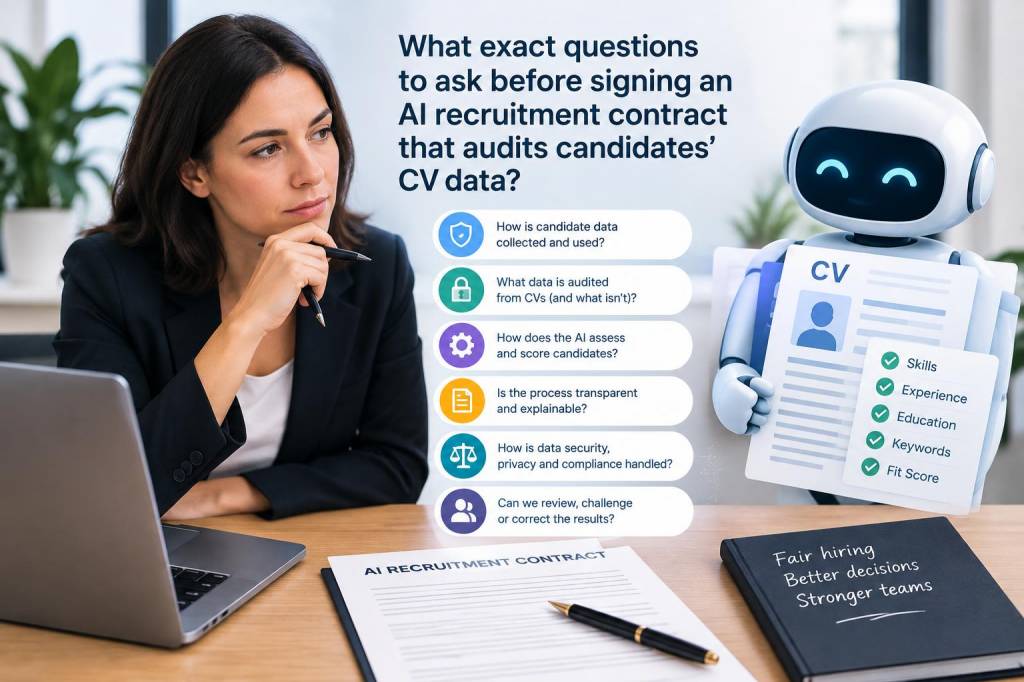
I remember the first time a recruiter asked me to sign a contract for an "AI audit" of candidate CVs. The language was dense, the promises were broad, and I left the meeting with more questions than answers. If you’re about to sign one of these contracts, you deserve clarity — not jargon. Below I lay out the exact questions I now ask before I sign, why each matters, and how to use the answers to protect your people, your brand, and your hiring outcomes.
Why ask detailed questions
I’ve learned that AI recruitment tools can be incredibly helpful — speeding up screening, surfacing candidacies you might miss, and standardizing parts of the process. But they can also embed bias, leak sensitive data, or make decisions you can’t explain to stakeholders or candidates. Asking the right questions upfront forces vendors to show their methods, commitments, and limitations. It also signals to your legal, HR and diversity teams that you’re taking governance seriously.
Data inputs and provenance
Start by asking where the tool gets its data and how it treats CV information.
Why it matters: I want to know whether the system is working from candidate-provided information only, or if it’s augmenting profiles with external data. Third-party enrichment can introduce errors and bias — and retention policies affect GDPR and other privacy obligations.
Purpose and scope of the audit
Clear scope prevents scope creep. Ask:
Why it matters: Automated rejections without human review are a legal and reputational risk. I insist on human-in-the-loop processes for final decisions.
Bias, fairness, and mitigation
This is the most important section for me. Companies often claim “bias mitigation” but won’t provide evidence.
Why it matters: I want data-driven answers, not platitudes. If a vendor can’t show how they measure and correct bias, I treat that as a red flag.
Explainability and transparency
Candidates, hiring managers, and regulators will want to know why a decision was made.
Why it matters: When a candidate asks "Why was I rejected?", I want an explanation that a non-technical person can understand. Opaque scores are not acceptable in many jurisdictions.
Security, privacy, and compliance
Protecting candidate data is non-negotiable.
Why it matters: I map answers to my legal obligations. If the vendor doesn’t support deletion or is ambiguous about storage location, I escalate to legal.
Ownership, IP and liability
Contracts should clearly state ownership and who is liable when things go wrong.
Why it matters: I want to avoid a situation where our applicant pool is used to train a vendor’s general model without our consent, or where we’re left paying for legal exposure we didn’t anticipate.
Performance, metrics and monitoring
Vendors often provide accuracy metrics, but I dig deeper.
Why it matters: A high overall accuracy can hide poor performance for important subgroups or specific roles. I ask for pilots and ongoing monitoring to ensure sustained performance.
Integration, usability and human workflow
Technical fit determines whether the tool actually gets used.
Why it matters: Tools that interrupt workflows or are hard to use end up ignored. I want an easy-to-adopt solution where humans remain accountable.
Third-party audits and certifications
Independent validation matters more than vendor claims.
Why it matters: Independent audits provide credibility. I prefer vendors who allow their code, models, or outputs to be examined by reputable third parties.
Candidate rights and communication
Consider what candidates will see and how they can interact with the process.
Why it matters: Transparency with candidates builds trust and reduces complaints. I require explicit candidate notice and easy appeal mechanisms.
Pricing, termination and exit strategy
Finally, commercial terms can leave you locked in if you’re not careful.
Why it matters: I once signed a contract that charged exorbitant exit fees for data export. Plan the exit before you sign.
| Question area | Why I ask |
|---|---|
| Data provenance | To know what’s being analyzed and whether external enrichments introduce risk |
| Bias & fairness | To ensure the tool does not systematically disadvantage groups |
| Explainability | So I can justify decisions to candidates and regulators |
| Security & compliance | To meet legal obligations and protect candidate data |
| Ownership & liability | To avoid losing control of data and bearing unexpected legal costs |
When vendors respond with specifics — sample audit reports, an outline of fairness metrics, a clear deletion process, SOC 2 evidence, integration playbooks — I feel confident moving forward. If answers are vague or evasive, I push for contract clauses that enforce transparency, regular third-party audits, and indemnities. In hiring, as in journalism, clarity and accountability matter. Ask the hard questions now so you don’t inherit the problems later.