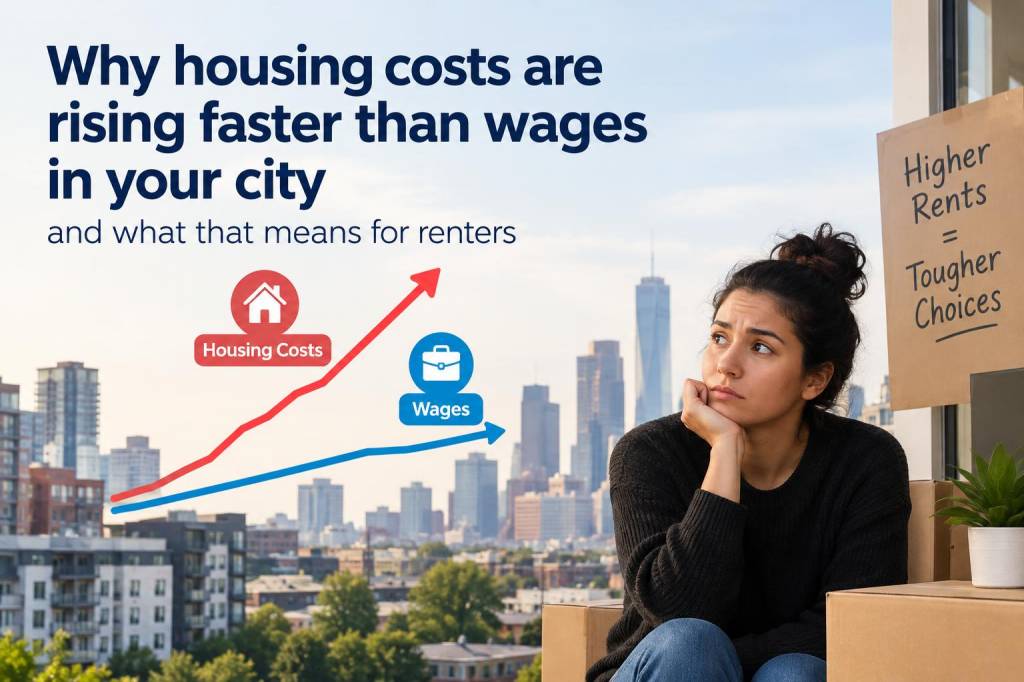
I keep hearing the same question from renters in every major city I follow: why does rent seem to climb faster than pay? It is not just a feeling. In many places, housing costs have been rising at a pace that leaves wages far behind, and that gap changes daily life in ways that are easy to feel but harder to explain. Rent takes a bigger share of income, saving becomes harder, and every move feels like a financial gamble.
When I look at this issue, I see more than one cause. Rising housing costs are usually the result of pressure from several directions at once: limited supply, higher borrowing costs, stronger demand in certain neighborhoods, higher maintenance expenses, and local policies that do not always keep pace with population growth. Wages, on the other hand, often move more slowly because pay adjustments are tied to productivity, company budgets, and broader labor market conditions. That mismatch is exactly why renters end up squeezed.
What is pushing housing costs upward
In many cities, the most basic reason is simple scarcity. If new homes are not being built fast enough, competition for available units intensifies. I have seen this play out in neighborhoods where a few newly listed apartments attract dozens of applicants within days. Landlords can raise asking prices because someone is almost always willing to pay more, especially in places near transit, schools, or strong job markets.
Construction itself has also become more expensive. Builders face higher costs for land, labor, materials, insurance, and financing. Even when a city wants more housing, it may take years for projects to move from planning to completion. Zoning rules, approval delays, and neighborhood opposition can all slow development. When new supply lags behind demand for years, rents usually rise faster than many households can keep up with.
Higher interest rates also matter. When borrowing costs rise, developers must pay more to finance projects, and buyers face larger monthly mortgage payments. Some potential homebuyers stay in the rental market longer because purchasing no longer feels affordable. That extra demand spills into renting and puts more pressure on prices. I think many people underestimate how quickly a mortgage rate change in one year can affect rental demand the next.
There is also the effect of investor activity. In some markets, large landlords, private equity firms, and short-term rental operators can reduce the number of homes available to long-term residents. Not every investor is a problem, but when housing is treated primarily as an asset, prices can rise in ways that are disconnected from local incomes. That disconnect is one of the biggest reasons renters feel trapped.
Why wages are not keeping pace
Wages do rise, but often not as quickly as housing. Many workers receive annual increases that are linked to inflation, company performance, or role changes, yet rent can jump much faster in hot markets. When I compare rent growth and pay growth side by side, the gap is often widest for workers in service jobs, administrative roles, retail, hospitality, and other sectors where salary growth tends to be modest.
Another issue is that wage growth is uneven. Some workers in tech, finance, or specialized fields may see strong salary increases, while many others do not. That means citywide averages can hide the pressure felt by ordinary renters. A neighborhood can become more expensive because higher earners move in, even if many long-time residents are not seeing comparable gains in pay.
Inflation adds another layer. Even when nominal wages rise, rising prices for food, transport, childcare, and utilities reduce what that raise actually buys. In practice, a person may receive a pay increase on paper and still feel poorer because housing consumes a larger share of the budget than before. This is why renters often describe their situation as getting tighter every year, even when they are technically earning more.
What this means for renters in daily life
The most obvious effect is affordability stress. When rent takes up too much of income, renters have to make trade-offs that affect everything else. Savings shrink, debt grows, and emergencies become harder to absorb. A broken appliance, a medical bill, or a sudden transport cost can throw off an entire month.
I also see renters becoming less mobile. People may stay in a job they do not like because moving closer to work would mean paying much more rent. Others delay starting a family, changing neighborhoods, or returning to school because they cannot predict where housing costs will go next. Housing starts shaping life choices in ways that go far beyond shelter.
There is a psychological cost, too. Constant renewal anxiety, surprise increases, and the fear of being priced out can create a sense of instability. Even renters who can currently afford their homes may feel uneasy if they know the next lease could change everything. That uncertainty makes it harder to plan, and planning is one of the things stable households need most.
Where renters feel the pressure most
The burden is not distributed evenly. Lower-income renters usually feel the sharpest impact, but middle-income households are also increasingly exposed in expensive cities. Families with children face a special challenge because they often need larger homes, better schools, and more stable neighborhoods, all of which can cost more. Younger renters trying to build a future are frequently the ones forced to choose between space, location, and affordability.
Below is a simple view of how the gap can affect different renter groups:
| Renter group | Common pressure point | Likely effect |
|---|---|---|
| Lower-income workers | Rent rises faster than pay growth | Higher risk of rent burden and instability |
| Middle-income households | Good jobs, but limited housing options | Forced compromises on size, location, or commute |
| Young professionals | Entry-level salaries lag expensive markets | Delayed saving and weaker mobility |
| Families | Need for larger units near schools and services | Higher monthly costs and fewer suitable listings |
| Older renters | Fixed or limited income growth | Greater vulnerability to displacement |
What I watch for in local housing markets
Whenever I study a city’s housing market, I look at a few key signals. Vacancy rates matter because low vacancy means less bargaining power for renters. New construction matters because it can ease pressure, though not always fast enough to help immediately. Wage growth matters because if incomes are rising only slowly, even a stable rent level can feel heavy.
I also pay attention to local policy changes. Rent controls, tenant protections, zoning reform, and housing vouchers can all influence outcomes, though none is a magic fix. A city that makes it easier to build housing may improve supply over time. A city that strengthens tenant protections may reduce displacement risk. A city that expands public support can help renters bridge the gap when market prices rise too quickly.
Another factor is neighborhood transformation. If an area becomes more desirable because of new transit, offices, restaurants, or cultural development, rents can jump faster than local incomes. That is not always a sign of a failing market. Sometimes it is a sign of success that has not been managed well. The question is not whether a neighborhood changes, but whether the people already living there can still afford to stay.
What renters can look at right now
For renters trying to make sense of rising costs, I think it helps to track a few practical numbers rather than relying on instinct alone. I would watch the share of income going to rent, the renewal terms in a lease, and whether similar units in the same area are listed above or below current payments. Small changes can reveal whether a neighborhood is heating up or cooling down.
It can also help to compare total living costs, not rent alone. A cheaper apartment farther from work may cost more once commuting, parking, childcare timing, and time loss are factored in. Sometimes the lowest sticker price is not the lowest real cost. I have seen renters make better decisions simply by mapping the full monthly impact instead of focusing only on the rent line.
Here are a few signs I pay attention to when judging market pressure:
Those signs do not mean every renter is in the same position, but they usually point to a market where housing demand is outrunning what local pay levels can support. When that happens, renters are forced to absorb the gap in ways that shape everything from savings to career decisions.
For readers trying to understand their own city, I think the most important thing is to look beyond a single rent number and ask a bigger question: are local incomes growing fast enough to support the housing market that exists right now? In many places, the answer is still no, and that gap is what keeps renters under pressure month after month.